Burner flame detection
Flame scanners and burner supervision selected for the fuel, burner geometry, combustion process and boiler manufacturer's safety logic.

Engineered protection for industrial boilers and boiler houses
Risk-based detection, alarm, shutdown interfaces, fixed firefighting systems, portable equipment, testing and maintenance for gas-, oil- and solid-fuel boiler installations.
Boiler fire protection is a coordinated system of hazard control, flame and fire detection, alarm, fuel isolation, shutdown interfaces, fixed firefighting equipment, portable extinguishers, emergency response and maintenance for boilers and boiler houses.
Boiler risks vary with fuel type, burner arrangement, firing rate, furnace and duct layout, auxiliaries, electrical systems, ventilation and occupancy. Common ignition scenarios include fuel leakage, flame failure, delayed ignition, hot surfaces, electrical faults, lubricating-oil release, overheated bearings, cable fires and unsafe hot work.
Reliance Fire Protection Systems supports surveys, design coordination, supply, installation, testing, commissioning and maintenance from Mumbai for boiler projects across India.
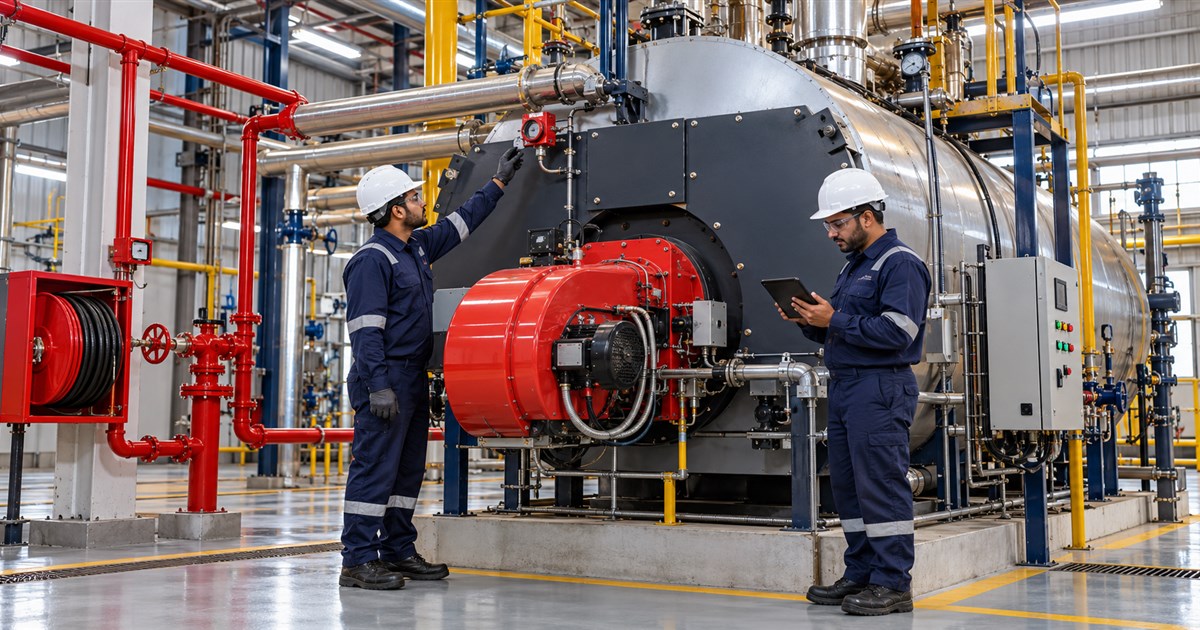
Flame scanners and burner supervision selected for the fuel, burner geometry, combustion process and boiler manufacturer's safety logic.
Fast optical detection for defined boiler-house hazards where flame signatures, field of view, obstruction and false-alarm immunity are assessed.
Spot, rate-of-rise or linear heat detection for cable routes, fuel-handling areas and equipment zones where temperature conditions permit.
Smoke detection for electrical, control and enclosed ancillary spaces, with aspirating systems considered for early warning in critical rooms.
Combustible-gas and carbon-monoxide monitoring designed around fuel properties, ventilation, detector location and alarm thresholds.
Cause-and-effect integration with burner management, emergency fuel shutoff, ventilation, dampers, plant controls and remote annunciation.
| Boiler hazard | Detection or control approach | Protection consideration |
|---|---|---|
| Fuel gas or oil leak | Leak prevention, combustible-gas detection, ventilation monitoring and emergency isolation | Hazard-specific shutdown and firefighting provision |
| Flame failure or delayed ignition | Burner flame supervision, purge logic and burner-management interlocks | Manufacturer and process-safety requirements |
| Electrical or cable fire | Smoke, heat or aspirating detection in control and electrical areas | Portable or fixed suppression suited to energized equipment |
| Lubricating-oil release | Leak control, hot-surface management and local flame or heat detection | Water spray, foam or local suppression after engineering review |
| Boiler-house structural exposure | Area detection, alarm, access control and emergency communication | Hydrants, hose reels, sprinklers or deluge as applicable |
Fire-water coverage for boiler buildings, fuel systems and external exposures with suitable pumps, storage, ring mains and access.
Automatic sprinkler coverage for assessed occupancies, ancillary spaces, cable areas and combustible loading where appropriate.
Engineered exposure or equipment protection for selected fuel-oil systems, structures and high-risk machinery following hydraulic design.
Foam or local special-hazard systems for defined flammable-liquid risks, electrical rooms or enclosed equipment after hazard analysis.
Correct extinguisher types, ratings, quantities and locations for electrical, flammable-liquid and ordinary-combustible hazards.
Fire separation, protected cable routes, safe access, signage, emergency lighting, evacuation planning and impairment control.
Package and process boilers serving engineering, automotive, chemical and general manufacturing facilities.
Utility boilers, captive power plants, turbine auxiliaries and associated fuel-handling infrastructure.
Steam boilers supporting hygienic processes, production, cleaning and utilities in regulated facilities.
Boiler houses serving dyeing, processing, drying, paper and pulp operations.
Boilers supporting laundry, sterilisation, kitchens, hot water and campus utility services.
Central utility plants, heating systems and mixed industrial or commercial boiler installations.
Survey, design coordination, supply, installation, testing, commissioning and maintenance support are available across all Indian states and union territories, subject to project scope, access and local approvals.
It combines hazard control, flame and fire detection, alarm, fuel isolation, shutdown interfaces, fixed firefighting equipment, portable extinguishers, emergency response and maintenance.
Options include burner flame scanners, UV or IR flame detectors, heat detectors, smoke or aspirating detection, combustible-gas detectors and CO monitoring, selected for the hazard and required function.
Fuel leakage, flame failure, delayed ignition, hot surfaces, electrical faults, overheated bearings, lubricating oil, cable fires, poor housekeeping and unsafe hot work.
Solutions may use hydrants, hose reels, sprinklers, water spray, deluge, foam, portable extinguishers or local special-hazard suppression after engineering review.
Yes. Approved logic can interface with burner management, emergency fuel isolation, ventilation, dampers and plant controls when defined by the project cause-and-effect requirements.
Yes. Detectors, alarms, valves, pumps, shutdown interfaces, suppression systems and portable equipment require planned inspection, testing and documented maintenance.
Yes. Reliance Fire Protection Systems supports boiler projects across Indian states and union territories.
Share the project location, boiler type and capacity, fuel, burner details, drawings, existing detection and firefighting systems, approval requirements and project stage.
Call +91 96999 90424 | sales@relifire.com | Contact Reliance Fire Protection Systems