
Reliance Fire Protection Systems provides fire alarm design, supply, installation, testing, commissioning, fire alarm audit, upgrades and AMC support for industrial, commercial, residential and institutional facilities across Indian states.
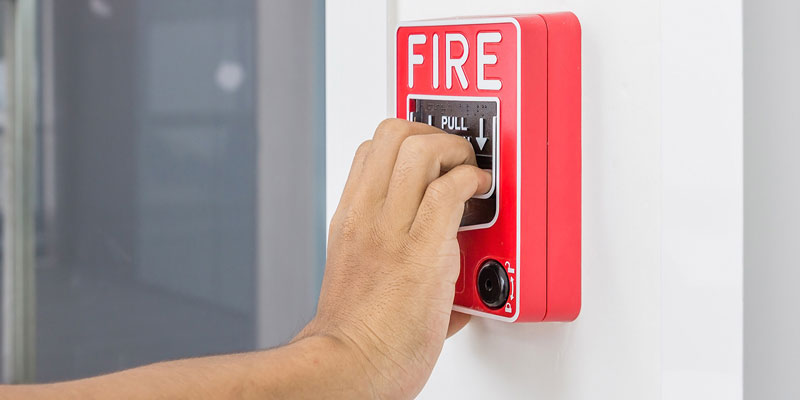
A fire alarm system provides early warning by detecting smoke, heat, flame or manual alarm activation and communicating the event through control panels, sounders, strobes and monitored interfaces. The correct system helps occupants respond quickly and supports coordinated operation of related life-safety systems.
Relifire supports new projects, expansions, retrofits and maintenance requirements for factories, warehouses, offices, hotels, hospitals, schools, residential towers, data centers, malls, logistics facilities, utilities and critical infrastructure.
Device-level identification, programmable cause-and-effect, networked panels, graphical monitoring and integration for medium to large facilities.
Zone-based detection using smoke detectors, heat detectors, manual call points, sounders and control panels for suitable applications.
Aspirating smoke detection, beam detectors, flame detectors, linear heat detection and application-specific solutions for challenging environments.
System health checks, device testing, battery checks, fault correction, panel replacement, expansion, integration and preventive maintenance.
Design, supply, installation and service support is available across India, subject to the project scope, site survey, authority requirements and logistics.
Fire alarm systems may interface with smoke control, fire dampers, HVAC shutdown, lifts, access control, public address, gas suppression, sprinkler flow switches, fire pumps, building management systems and remote monitoring. Relifire can support cause-and-effect planning, system integration and commissioning coordination.
Final design should provide clear zoning or device addressing, reliable alarm notification, suitable survivability, supervised circuits, standby power and practical testing access.
Review occupancy, fire risks, ceiling heights, environmental conditions, existing systems, interfaces and authority requirements.
Prepare device selection, zoning or addressing, loop and circuit layouts, cause-and-effect logic, power and battery calculations.
Coordinate panel, detector, call point, sounder, strobe, module, cable and interface installation with testing and commissioning.
Provide periodic testing, fault diagnosis, battery checks, detector cleaning, repairs, upgrades, documentation and training.
It is a life-safety system that detects fire conditions, warns occupants and communicates alarms or control signals through detectors, manual call points, control panels, sounders, strobes and interfaces.
Yes. Relifire supports state-wise design, supply, installation, testing, commissioning, audit, upgrades, maintenance and AMC enquiries across India.
Addressable systems identify individual devices or precise locations, while conventional systems identify alarm zones. The suitable choice depends on facility size, risk, operations and project requirements.
Depending on the system and application, options include smoke, heat, multi-sensor, beam, aspirating, flame and linear heat detectors, plus manual call points and monitoring modules.
Yes, when correctly designed. It may interface with lifts, HVAC, smoke control, dampers, access control, suppression systems, fire pumps, BMS and public address systems.
The maintenance schedule should follow applicable standards, authority requirements, manufacturer guidance and site risk. All devices and interfaces should receive documented periodic testing.
Share your city, building type, floor area, number of floors, existing panel details and required project scope for design, supply, installation, testing, commissioning or AMC support.
Oxygen Reduction System
Hypoxic Fire Safety system
Hypoxic Air Protection
Hypoxic Fire Prevention System
Server Room Fire Protection System
IT Room Fire Protection System
Data Center Fire Protection
AI Fire Suppression Systems
AI Fire Protection Smoke Detector
AI Fire Alarm System
AI Based Fire Protection System Project
Oxygen Fire Protection Systems
Fire Prevention system
Ai thermal camera for critical environment
Industrial UVIR Detectors
Infrared camera fire thermal
Thermal Fire Camera
Battery Fire
Flame Detector
Spark Detector
Warehouse Oxygen Reduction System
Heritage Building Fire Protection
Museum Fire Protection System
Auto Mobile Fire Safety System
IoT-based Fire Safety Systems
Passive Fire Doors
Passive Fire Protection Tunnel System
Railway Fire Fighting Systems
Deluge System
Fire And Safty Audits
Fire Contractor
Fire Alarm
Fire Extinguisher
Jet Monitor Fire Fighting
Wet Sprinkler
Foam/Rim Seal Protection
High Velocity Water Spray System
Low Velocity Water Spray System
Vehicle Fire Safety
Fire Pressurisation System
Auto Cad Design & Estimation
Detail Engineering for complete Site
Design Consultancy as required
Aerosol Extinguishing System
Co2 flooding system
FM-200 Fire Suppression Systems
NOVEC-1230
Inert Gases
LT/HT Panel Gas Flooding System
Gas Leak Detection
Fire Evacuation Maps
Very Early Smoke Detection VESDA
Nuclear Fire Detection System
Linear Heat Sensing Detection
Pollution Wipe Box for Aviation Industries
Project Management
Mock Drills
Fire Safety Training
Advance Fire System
Lithium-Ion Battery Fire Protection
Energy Storage Fire Protection System
EV Fire Suppression Systems
Fire Consultancy Services
Honeywell Fire Alarm Systems
Oxygen Sensors for Data Centers & Server Rooms
Smoke Curtain System
UL / EN Fire Curtain System
Water Curtain System
Tunnel Fire Protection System
Simplex Fire Alarm Systems
Self-Test Smoke Detectors
IG541 Fire Gas Suppression System
Bosch Fire Alarm Systems
Fire Suppression
Fire Hydrant
Electrical Panel Gas Flooding System
Fire Fighting Mask
Vermiculite Fire Spray
fire protection contractor license
Oxygen sensors for data centers and server rooms
Warehouse Fire Protection
Fire Safety Budget Estimation
Fire Fighting Project Design Services
Bus Fire Protection – Engine & Water Mist
Data Center Fire Protection Contractors
Fire Safety Audits & Licensing
Fire Safety Audit for Banks
Fire Safety Audit in Mumbai
Fire Audit in Navi Mumbai
Fire Audit in Thane
Fire Audit for Industrial
Fire Audit in MIDC
Fire Audit in Pune
Fire Consultancy Services
Fire Fighting Equipment
Fire Door License Agency in Mumbai
Fire Door License Agency in Pune
Fire Consultant in Bhubaneswar
Fire Consultant in Chhattisgarh
Fire Consultant in Jharkhand
Fire Consultant in Odisha
Fire Consultant in Raipur
Fire Consultant Near Me
Fire Budget Estimation
Fire Detection & Alarm
Fire Engineering & System
Fire Fighting Drone Operator in Mumbai
Fire Fighting System Maintenance
Fire Fighting Systems in Mumbai
Fire Gas Flooding System
Fire PASS
Fire Prevention System in Building
Fire Prevention System in Maharashtra
Fire Prevention System in Mumbai
Fire System Repair Services
Fire System Solutions
Fire Video Analytics Systems
Gas Components Supplier in Mumbai
Gas Suppression System Maintenance
Gas Suppression System in Mumbai
GST Edwards Fire Alarm Systems
Importance of Fire Protection Systems in India
MEP design consultancy service provider
Transformer Fire Protection System
Top Fire Company In India
Top 10 Fire Protection Companies in India
Top Fire Contractors in India
Tunnel Fire Protection Systems in Maharashtra
Siemens Fire Alarm Systems
Server Room ups Room Fire Protection
Safety Officer Recruitment
Ravel Fire Alarm Systems
Passive Fire Protection System
Panel Flooding System
Passive Fire Doors in Maharashtra
Nuclear Fire Consultant Near Me
Novec 1230 Fire Suppression System
Museum Fire Prevention System
Mock Drills for Fire Safety
Mircom fire system
MEP design consultancy service provider
Inergen® Fire Protection System
AI Camera Safety
Custom AI Safety
Oil Leak Detection Systems
Black Carbon Monitoring System
Fire Extinguisher Pressure Monitor IOT
Tyre Plant Fire Protection Systems
Banbury Mixing Tower Safety & Fire Protection