Room survey and monitoring design
Review room layout, occupancy, ventilation, gas-related equipment and operating conditions to define monitoring objectives and measurement locations.

Oxygen concentration monitoring for critical IT environments
Project-specific oxygen monitoring, local alarms, system integration, installation and maintenance support for data centers, server rooms, network facilities and related equipment spaces across India.
An oxygen sensor measures oxygen concentration in the monitored air. A complete monitoring system can display readings, report faults and activate configured alarms or interfaces when conditions move outside the engineered limits.
Oxygen monitoring can form part of a risk-based design where inert gases, engineered oxygen reduction or other conditions could alter the room atmosphere. It should be coordinated with ventilation, access arrangements, alarms and operating procedures.
Reliance Fire Protection Systems supports surveys, sensor and controller selection, supply, installation, testing, commissioning and maintenance enquiries from Mumbai for project locations across India.
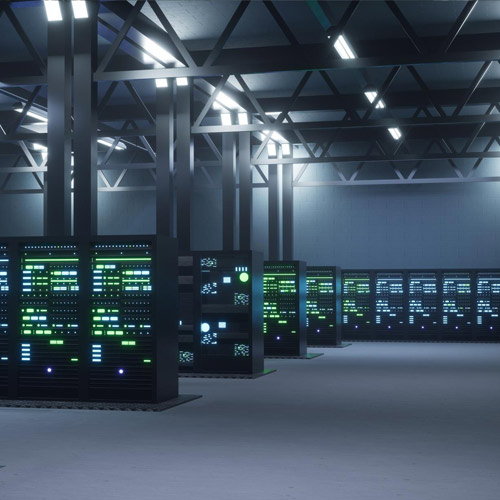
Application image of a data center; actual monitoring equipment and sensor positions are selected for the project.
Review room layout, occupancy, ventilation, gas-related equipment and operating conditions to define monitoring objectives and measurement locations.
Select the measuring range, sensing technology, display, accuracy, operating conditions, fault reporting and maintenance requirements for the actual application.
Coordinate audible and visual indication, alarm annunciation and display arrangements with the site response plan and engineered alarm logic.
Review compatible outputs and communications, monitoring points, signal-loss behaviour and the approved interfaces with building and fire systems.
Install the selected equipment, check representative readings and verify alarm, fault, power and interface responses against the documented design.
Coordinate functional testing, calibration, service records and sensor replacement requirements using the equipment instructions and agreed maintenance scope.
| Application | Monitoring purpose | Design consideration |
|---|---|---|
| Normal server-room monitoring | Measurement and indication where a risk assessment identifies an oxygen-monitoring need | A standard IT room does not automatically require oxygen reduction |
| Inert-gas protected rooms | Monitoring coordinated with the suppression and personnel-safety strategy | An oxygen reading does not by itself confirm safe re-entry after discharge |
| Engineered oxygen-reduction systems | Feedback monitoring, independent alarms and control interfaces where required by design | Occupancy, exposure, access controls and failure response require separate review |
| Plant rooms and adjacent gas areas | Monitoring based on credible gas release and airflow patterns | Assess the actual gas hazard; oxygen sensing does not identify every toxic gas |
Review drawings, dimensions, airflow, occupancy, potential oxygen-displacing sources and existing protection.
Establish sensor coverage, model requirements, alarm response, interfaces and maintenance access.
Check measurement response, alarm and fault indication, power arrangements and approved interlocks.
Record the configuration and commissioning results, then plan calibration and functional tests.
The MSA sensor selection and placement guide highlights airflow, possible release locations, occupied areas and access for calibration. Use the exact equipment manual and site assessment to determine placement rather than applying one universal mounting height.
Define alarm settings and response procedures against the applicable requirements, manufacturer instructions and project risk assessment. Systems intended to operate below normal atmospheric oxygen levels require a separate review of occupancy, exposure and access conditions.
Project enquiries are coordinated from Mumbai for data centers, enterprise server rooms, co-location facilities, network operation centers and associated plant spaces. Supply and site services depend on the selected equipment, location and agreed scope.
An oxygen sensor measures oxygen concentration in the monitored air. A complete monitoring system can display readings, report faults and activate configured alarms or interfaces when conditions move outside the engineered limits.
No. A sensor measures oxygen concentration; it does not remove oxygen or extinguish fire. Nitrogen generation, oxygen-reduction equipment, fire detection and suppression are separate systems that may use monitoring signals within an approved design.
Placement depends on room geometry, airflow, potential gas-release or oxygen-reduction sources, occupied areas and maintenance access. The survey should determine representative measurement points and any additional monitoring needed; there is no single mounting position suitable for every room.
The number depends on room size and layout, air movement, partitions, raised-floor or ceiling voids, hazards, required coverage and manufacturer guidance. A site assessment should establish the monitoring arrangement and any redundancy requirements.
Alarm levels, delays and response actions must be established through the applicable requirements, manufacturer instructions and the project risk assessment. A fire-prevention target must not be treated as an occupational exposure limit or a universal safe-entry condition.
Yes, where the selected equipment supports suitable outputs and compatible interfaces. Confirm the exact relay, analogue or communications options, fault supervision, power-failure behaviour and tested cause-and-effect sequence before specifying integration.
No. Oxygen measurement and smoke or fire detection serve different purposes. The room fire strategy should define the required detection, alarm, suppression and oxygen-monitoring functions and how their interfaces are coordinated.
Calibration and functional-test intervals follow the exact sensor and controller instructions, operating conditions and maintenance plan. Commissioning should document baseline readings, alarms, faults and interfaces, with ongoing records and sensor replacement when required.
Reliance Fire Protection Systems supports oxygen-monitoring project enquiries from Mumbai for data centers, server rooms and related facilities across Indian states and union territories. Survey, installation, commissioning and maintenance scope are confirmed for the selected system and project location.
Share the site location, room drawings and dimensions, ventilation details, occupancy, any inert-gas or oxygen-reduction equipment, existing sensors, required interfaces, model specifications and service scope.
Share the site location, room drawings and dimensions, ventilation details, occupancy, any inert-gas or oxygen-reduction equipment, existing sensors, required interfaces, model specifications and service scope.
Call +91 96999 90424 | sales@relifire.com | Contact Reliance Fire Protection Systems