Point optical smoke detector
A photoelectric sensing chamber detects light scattered by smoke particles. It is commonly used for many occupied and commercial spaces after environment and fire type are assessed.

Early warning matched to the fire signature, environment and building use
Survey, detector selection, layout coordination, supply, installation, programming, functional testing and maintenance planning.
A smoke detector senses airborne products from a developing fire using an approved sensing method and sends an alarm or status signal to compatible fire-alarm control equipment. The complete system must then indicate the location, notify occupants or responders and perform approved cause-and-effect actions.
A system smoke detector is different from a self-contained residential smoke alarm. A smoke alarm usually combines sensing and an audible warning in one unit; a commercial detector normally depends on a control panel, power, circuits or loops, notification appliances and system programming.
Reliance Fire Protection Systems supports design coordination, supply, installation, testing, commissioning and maintenance from Mumbai for commercial, industrial and critical facilities across India.
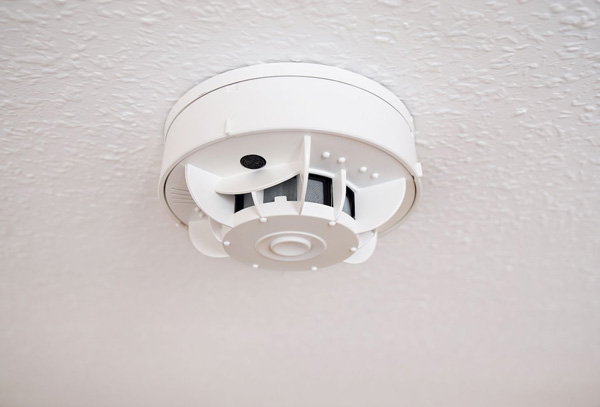
A photoelectric sensing chamber detects light scattered by smoke particles. It is commonly used for many occupied and commercial spaces after environment and fire type are assessed.
Two or more sensing elements—such as smoke, heat or carbon monoxide—may be evaluated together to improve response or unwanted-alarm resistance for an approved application.
A transmitter and receiver or reflector monitor smoke obscuration across an open path, often for high or large spaces where point detection is impractical.
A pipe network continuously draws air samples to a central detector and can provide very early warning in clean, critical or challenging environments.
A duct detector samples air in HVAC ductwork for a defined control purpose. It is not automatically a substitute for open-area detection or complete building coverage.
Ionization technology responds to combustion aerosols using a radioactive source. Selection, approval, handling, disposal and local requirements need specific review.
Flat, sloped, coffered or irregular ceilings and high-level spaces change smoke movement and may require different technology or layout treatment.
Structural elements, storage, partitions, services and equipment can delay or redirect smoke and affect detector coverage.
Supply air, extract, pressurisation, process ventilation and open doors may dilute, move or prevent smoke from reaching a detector promptly.
Dust, steam, insects, condensation, aerosols and process emissions can contaminate sensing chambers or create unwanted alarms.
Fuel, ignition, ventilation and fire growth influence particle size, heat, colour and concentration; no detector responds identically to every fire.
Devices need safe access for inspection, functional testing, cleaning, replacement and identification throughout the building lifecycle.
Individual device identification, analogue status, event history and configurable cause-and-effect support larger or information-intensive projects.
Devices are arranged on zone circuits and an alarm is generally identified by zone rather than by an individually addressed detector.
Approved radio devices may assist heritage, retrofit or access-constrained projects but still require signal, battery, supervision and maintenance planning.
Cross-zoned or other approved detection logic may initiate warning, equipment control and extinguishing-system release after the defined sequence is satisfied.
Approved outputs may control HVAC, smoke dampers, doors, lifts, shutters, access control, plant shutdown or remote monitoring.
The overall alarm strategy must provide suitable audible, visual, voice or other notification for occupants and operational needs.
Project enquiries are supported across all Indian states and union territories, subject to site survey, system design, approvals, product availability, installation access and service requirements.
It senses airborne fire products and sends an alarm or status signal to compatible fire-alarm control equipment.
Common options include point optical, multi-sensor, projected beam, aspirating and duct smoke detection.
Placement must follow the approved design while considering ceiling form, height, obstructions, airflow, room use, nuisance sources and access.
Standard smoke detection may be unsuitable where steam, dust or aerosols create unwanted alarms; the design must select an appropriate approved method.
Addressable systems identify individual devices, while conventional systems generally identify the alarmed circuit or zone.
Use approved functional tests, panel verification, contamination or sensitivity review, cleaning, fault correction and documented replacement procedures.
Yes. Reliance Fire Protection Systems supports enquiries from Mumbai across India, subject to project requirements.
Share the building use, drawings, ceiling heights and geometry, ventilation, environmental conditions, fire strategy, required approvals, existing alarm platform, interfaces and project location.
Call +91 96999 90424 | sales@relifire.com | Contact Reliance Fire Protection Systems