Water and water-mist extinguishers
Designed for suitable ordinary combustible hazards. Electrical or reactive-material use requires a specifically approved unit and application.

Hazard-based extinguisher selection, supply, installation and lifecycle service
Portable and wheeled water, foam, dry chemical powder, carbon dioxide, wet chemical and clean-agent extinguishers.
A fire extinguisher is portable or wheeled first-aid firefighting equipment containing an extinguishing agent intended for controlling a small fire at an early stage when the correct unit is used by a trained person with a safe escape route.
The extinguisher must match the expected fuel, fire class, electrical hazard, environment, required fire rating and user capability. One generic extinguisher is not suitable for every workplace or every fire.
Reliance Fire Protection Systems supports hazard surveys, selection, supply, mounting, identification, inspection, refilling, testing and maintenance from Mumbai for residential, commercial, industrial and infrastructure facilities across India.
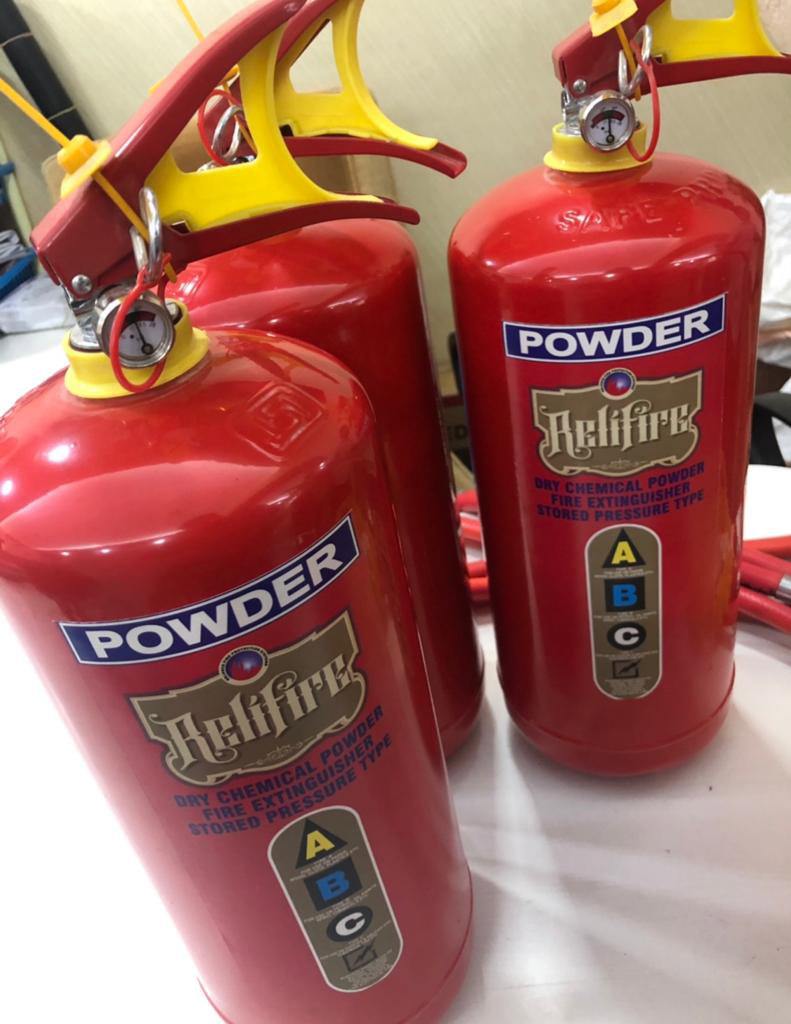
Designed for suitable ordinary combustible hazards. Electrical or reactive-material use requires a specifically approved unit and application.
Used for suitable flammable-liquid and ordinary-combustible fires, subject to agent compatibility and equipment rating.
Versatile powder units are selected by powder type, fire rating and hazard; residue and visibility effects must be considered.
Non-residue agent for suitable electrical and liquid hazards, with attention to discharge cold, re-ignition and confined-space risk.
Designed for suitable high-temperature cooking oils and fats, commonly used around commercial kitchen appliances.
Residue-minimising options for suitable sensitive equipment areas, selected around agent approval, rating and room conditions.
Materials such as wood, paper, cloth and many plastics require an agent and rating suitable for deep-seated combustible fires.
Fuel, paint, solvent and other liquid hazards require an agent that controls flame without dangerously spreading the liquid.
Gas fires require isolation of the fuel supply whenever safely possible and an extinguisher approved for the specific risk.
Reactive-metal hazards require a specialist extinguishing agent matched to the particular metal; common agents may be dangerous.
High-temperature cooking-media fires require a suitable wet-chemical or specifically approved extinguisher.
This is an electrical hazard rather than a fuel class. Use a suitable non-conductive unit and isolate power when safe and authorised.
Confirm access, location, signage, seal, pin, gauge or indicator, hose, nozzle, body condition and service label.
Competent servicing examines operating components, agent condition, pressure, weight, corrosion, damage and records.
Used, partially discharged or deficient extinguishers require correct recharge, leak checks and approved replacement parts.
Applicable extinguishers require testing at defined intervals according to type, construction, condition and governing requirements.
Severe corrosion, damage, failed testing, obsolete components or exceeded service limitations may require safe replacement.
Maintain equipment identification, location, type, capacity, service history, findings, actions and next-due status.
Product selection, supply, installation and service enquiries are supported across all Indian states and union territories, subject to product availability, service scope and local approval requirements.
It is portable or wheeled first-aid firefighting equipment for controlling a small early-stage fire with the correct agent.
Selection depends on fire class, fuel, electrical hazard, occupancy, environment, rating, travel distance and approvals.
Common types include water, water mist, foam, dry chemical powder, carbon dioxide, wet chemical and clean-agent units.
Only use a unit suitable for energised electrical equipment and isolate the power when safe and authorised.
Only after raising the alarm and when trained, the fire is small, conditions are manageable and a clear exit remains available.
Yes. They require visual checks and scheduled maintenance, testing, recharge or replacement appropriate to the unit.
Yes. We support selection, supply, installation and service enquiries from Mumbai across India.
Share the facility location, occupancy, hazards, floor area, existing extinguisher schedule, required ratings or approvals, quantities, installation and service scope.
Call +91 96999 90424 | sales@relifire.com | Contact Reliance Fire Protection Systems