Oxygen-reduction prevention
Assess nitrogen-enriched-air prevention for suitable enclosed spaces, with material-specific design limits, monitored conditions and an access strategy.
View service details
Prevention, early detection and engineered protection
Project-specific solutions for critical rooms, industrial facilities and sensitive assets, combining suitable prevention, detection, alarm, suppression and monitoring technologies.
An advanced fire protection system combines selected prevention, early detection, alarm, suppression and monitoring technologies around a defined hazard. The solution is engineered for the protected space, materials, occupancy, equipment and operating requirements.
Reliance Fire Protection Systems supports surveys, design coordination, equipment supply, installation, testing, commissioning and maintenance enquiries from Mumbai for project locations across India.
Oxygen-reduction fire prevention is one option for suitable enclosed spaces. Early detection, monitored interfaces and appropriate suppression may also form part of the wider strategy. System selection starts with the hazards and operating conditions, rather than one technology for every site.
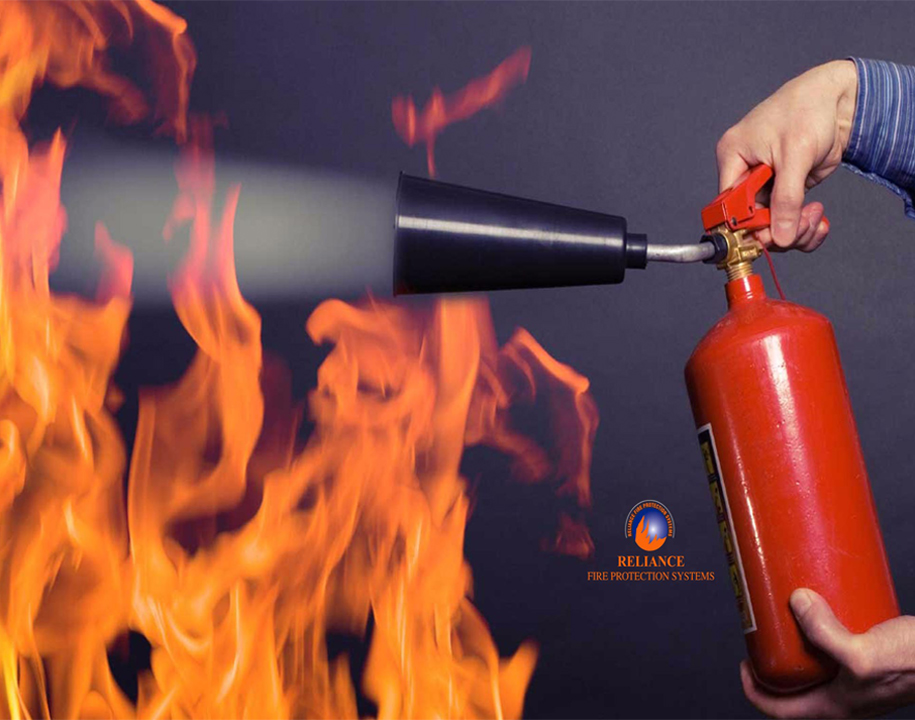
Illustrative fire-protection image. The final equipment and system arrangement depend on the project.
Assess nitrogen-enriched-air prevention for suitable enclosed spaces, with material-specific design limits, monitored conditions and an access strategy.
View service detailsReview sensitive detection for critical rooms and concealed risks, including airflow, sampling arrangement, alarm response and maintenance access.
View service detailsConsider appropriate thermal, flame or other detection for the actual hazard, environment, coverage and control interfaces.
View service detailsReview suitable gaseous or other suppression for the hazard, enclosure, occupancy, release sequence and approval requirements.
View service detailsCoordinate sensors, alarm and fault signals, compatible interfaces, power supplies, cause-and-effect logic and operational records.
View service detailsDefine surveys, drawings, quantities, equipment specifications, installation, commissioning, handover, audits and service scope.
View service detailsAn oxygen-reduction system introduces nitrogen-enriched air into a suitable enclosed space and continuously monitors the oxygen concentration against the engineered design limits. Its role is fire prevention under defined conditions; it is not a gaseous fire-extinguishing system.
No. The design concentration depends on the materials, protection objective, enclosure, leakage, operating conditions and applicable requirements. A generic oxygen percentage must not be used as a substitute for project-specific engineering.
Access conditions require a specific occupational risk assessment and applicable safety controls. Assess occupancy, personnel suitability, exposure conditions, entry procedures, warning and monitoring arrangements, training and emergency response rather than assuming unrestricted access.
No. Prevention technology must be coordinated with the overall fire strategy, including suitable detection, warning, escape, structural measures, emergency procedures and any required firefighting provision. The project design determines the complete arrangement.
| Application | Information to assess |
|---|---|
| Data centres, IT and server rooms | Equipment, airflow, room boundaries, electrical and battery hazards, occupancy and business-continuity requirements. |
| Archives, museums and collections | Materials, storage arrangement, conservation needs, enclosure leakage and staff access. |
| Selected warehouses and storage spaces | Commodities, handling operations, doors, ventilation, protected volume and material-specific prevention suitability. |
| Cleanrooms and industrial premises | Processes, environmental conditions, contamination constraints, utilities, personnel access and compatible protection. |
Review drawings, hazards, materials, occupancy, ventilation, existing systems and the protection objective.
Define the suitable technology, design limits, monitoring, interfaces, access arrangements and approval basis.
Coordinate equipment and installation, then complete the agreed functional, alarm, fault and interface tests.
Provide agreed records, operating guidance, training and inspection or maintenance arrangements.
ISO 20338:2019 addresses the design, installation, planning and maintenance of oxygen-reduction fire-prevention systems. Its scope differs from gaseous extinguishing systems.
Confirm applicable Indian requirements, the accepted design basis, manufacturer instructions and relevant authority conditions for the actual project. Equipment supply or a technical reference does not automatically grant building approval or establish product certification.
Reliance Fire Protection Systems supports advanced fire-system and Fire Safety Audit Services enquiries across all Indian states and union territories. Survey, design, installation and maintenance scope is coordinated from Mumbai according to the site hazards, operating needs and applicable requirements.
Delhi is a union territory; Delhi NCR also includes locations in neighbouring states. Enquiry coverage does not indicate a local office in each state or union territory.
Our advanced fire protection and Fire Safety Audit Services support covers enquiries for the following industrial zones, IT parks, SEZs, logistics hubs and manufacturing clusters across India. Survey, supply, execution and service arrangements are agreed for each site.
An advanced fire protection system combines selected prevention, early detection, alarm, suppression and monitoring technologies around a defined hazard. The solution is engineered for the protected space, materials, occupancy, equipment and operating requirements.
An oxygen-reduction system introduces nitrogen-enriched air into a suitable enclosed space and continuously monitors the oxygen concentration against the engineered design limits. Its role is fire prevention under defined conditions; it is not a gaseous fire-extinguishing system.
No. The design concentration depends on the materials, protection objective, enclosure, leakage, operating conditions and applicable requirements. A generic oxygen percentage must not be used as a substitute for project-specific engineering.
Access conditions require a specific occupational risk assessment and applicable safety controls. Assess occupancy, personnel suitability, exposure conditions, entry procedures, warning and monitoring arrangements, training and emergency response rather than assuming unrestricted access.
Potential applications include data centres, server and IT rooms, archives, museums, selected warehouses, cleanrooms and industrial facilities. Each application must be assessed for its materials, environment, occupancy and system limitations before selection.
No. Prevention technology must be coordinated with the overall fire strategy, including suitable detection, warning, escape, structural measures, emergency procedures and any required firefighting provision. The project design determines the complete arrangement.
Oxygen reduction maintains a controlled atmosphere continuously for prevention in a suitable enclosure. Inert-gas suppression is an engineered extinguishing system that releases agent through a defined activation sequence. Their objectives, controls and design requirements differ.
Suitable detection can be considered after reviewing the hazard, environment, detector coverage, equipment compatibility and alarm response. Aspirating smoke detection, thermal monitoring or flame detection may be relevant to particular applications; none is a universal replacement for all required detection.
Monitored alarm, fault and status interfaces can be reviewed where supported by the selected equipment. Define compatible connections, responsibilities, cause-and-effect logic and commissioning tests before integration.
Follow the approved design, manufacturer instructions and site maintenance plan. Depending on the system, checks may include sensors and calibration, nitrogen equipment, enclosure changes, alarms, power supplies, release controls, interfaces, faults and operating records.
Reliance Fire Protection Systems supports surveys, design coordination, supply, installation, testing, commissioning, audit and maintenance enquiries from Mumbai across all 28 Indian states and 8 union territories. Execution and service scope are agreed for the specific site and applicable credentials.
Share the site location, room or building drawings, dimensions, stored materials, hazards, occupancy, ventilation, existing systems, utilities, approval conditions, operating constraints and required scope. Call +91 96999 90424 or email sales@relifire.com.
Share the site location, drawings, hazards and operating requirements for a project-specific review.