Oil-filled transformers
Automatic water spray arranged around transformer surfaces, radiators and defined oil-fire exposure zones.

Engineered fixed water spray for transformers and defined industrial hazards
Hazard assessment, hydraulic calculation, nozzle layout, detection and deluge control, installation, acceptance testing and maintenance.
A high velocity water spray system is a fixed open-nozzle arrangement designed to apply a calculated water discharge over specific equipment or hazard surfaces for fire control, extinguishment, cooling or exposure protection according to the approved design basis.
When the deluge valve opens, all nozzles in the selected zone discharge together. Nozzle type, pressure, angle, spacing and distance are engineered so the spray reaches the required surfaces despite equipment geometry and obstructions.
Reliance Fire Protection Systems supports survey, hydraulic design, supply, installation, testing, commissioning and maintenance from Mumbai for technically suitable projects across India.
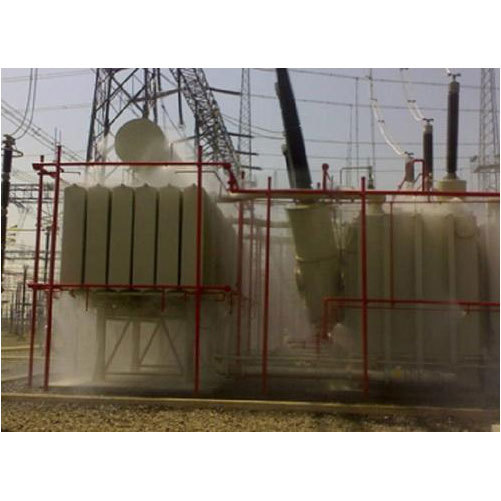
Automatic water spray arranged around transformer surfaces, radiators and defined oil-fire exposure zones.
Project-specific protection coordinated with electrical isolation, equipment clearances, drainage and containment.
Selected machinery, bearings or oil systems where water spray is suitable for the fuel and equipment configuration.
Localised hazards assessed for spray coverage, shutdown interfaces, drainage and effects on adjacent equipment.
Specific high-hazard surfaces requiring rapid cooling or fire control under an adopted water-spray design standard.
Water-reactive materials, incompatible electrical risks or hazards without adequate drainage require another strategy.
Fire-water tank, pumps and distribution network sized for the hydraulically demanding zone and simultaneous requirements.
A normally closed control valve with trim, release, isolation, alarm, drain and test arrangements suited to the system.
Nozzles selected for discharge coefficient, spray angle, droplet characteristics, pressure and protected-surface geometry.
Approved heat, flame or other detection with alarm, confirmation, release and electrical-isolation interfaces.
Hydraulically sized piping, strainers, fittings, supports and corrosion protection arranged without obstructing access.
Capacity to remove fire water and released oil safely, limiting pooling, spread and impact on nearby equipment.
Calculate density, protected surface, nozzle flows, pipe losses and required pressure at the hydraulically remote nozzles.
Coordinate nozzle angle, distance, orientation and overlap around radiators, bushings, conservators and obstructions.
Define detection, transformer trip, isolation, alarm and release sequence with the responsible electrical engineer.
Outdoor spray distribution can be affected by wind, corrosion, contamination, freezing risk and equipment movement.
Bunds, drains, oil-water separation and disposal routes must handle the design discharge and fire scenario.
Verify valve actuation, alarms, pressure, flow and actual spray distribution under a controlled approved test plan.
Project enquiries are supported across all Indian states and union territories, subject to hazard suitability, hydraulic design, water supply, drainage, site survey and approval requirements.
It is a fixed open-nozzle system that applies calculated water spray over specified hazard surfaces for the approved protection objective.
Common applications include oil-filled transformers, reactors and selected industrial oil hazards where the design basis permits water spray.
Detection initiates alarm and release logic, opens the deluge valve and supplies every open nozzle in the selected zone.
Nozzle characteristics, droplet momentum and objectives differ; hazard analysis and the adopted criteria determine the correct choice.
No. Isolation, containment, drainage, separation, barriers and emergency procedures remain essential.
Inspect supply, valves, detection, controls, nozzles and pipes, then verify actuation, pressure, flow and coverage under an approved plan.
Yes. We support enquiries from Mumbai across India, subject to engineering, site and approval requirements.
Share equipment ratings and dimensions, oil quantity, site drawings, hazard assessment, water supply and pump data, detection philosophy, electrical interfaces, drainage details and applicable specifications.
Call +91 96999 90424 | sales@relifire.com | Contact Reliance Fire Protection Systems