Fixed manual monitors
Permanent monitors operated locally through hand wheels, tillers or handles from a planned safe operating position.

Large-stream firefighting, equipment cooling and exposure protection
Hazard assessment, hydraulic coordination, fixed or mobile monitor selection, water and foam integration, testing and maintenance.
A fire water jet monitor is a device that holds and directs a large-stream nozzle supplied by rigid piping or hose, allowing water or an approved foam solution to be applied from a selected position and direction.
Monitors can deliver straight streams for reach or fog patterns for cooling and exposure protection, depending on the selected nozzle. They may be fixed manual, portable, self-oscillating or remotely controlled.
Reliance Fire Protection Systems supports survey, design coordination, supply, installation, testing, commissioning and maintenance from Mumbai for industrial and infrastructure projects across India.
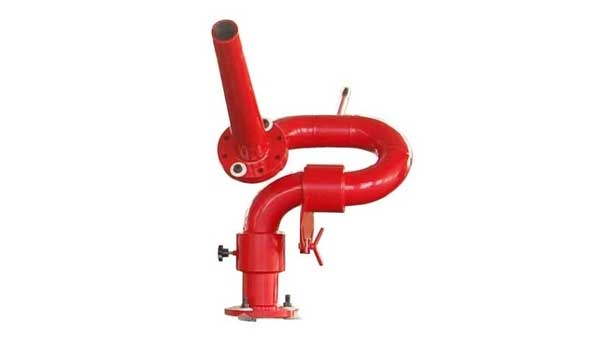
Permanent monitors operated locally through hand wheels, tillers or handles from a planned safe operating position.
Transportable units supplied by hose and secured in accordance with the manufacturer's instructions before flowing water.
Water-powered or approved automatic movement sweeps a defined sector for cooling or exposure protection.
Electric, hydraulic or other approved actuation permits positioning from a protected control point.
Selected for straight or fog streams used for fire attack, cooling or exposure protection where water is suitable.
Compatible monitors, nozzles and proportioning equipment apply the specified foam solution for defined liquid-fuel hazards.
Cooling, exposure protection or engineered foam application around tanks, loading areas and process equipment.
Large-stream application where heat, distance or hazardous materials make protected operating positions important.
Protection of transformers, conveyors, stockyards, machinery and other project-specific outdoor or semi-open hazards.
Jetty, terminal, ship-side or deck applications using materials and finishes suitable for the corrosive environment.
Selected large external hazards, storage piles or loading areas where an engineered water supply and safe access exist.
Portable or vehicle-mounted master-stream devices selected and operated under trained incident command.
Required nozzle flow and pressure must be available at the most demanding operating condition, including simultaneous demand.
Throw, elevation, rotation, wind, heat, obstructions and nozzle pattern determine whether the target can be covered.
Nozzle reaction acts on the monitor, base, piping and structure; supports and portable anchoring must resist these loads.
Remote drives, panels, cables and devices must suit environmental exposure and any electrical area classification.
Body, nozzle, seals, fasteners and finish must match water quality, chemical exposure, marine atmosphere and climate.
Operators need protected access, clear travel limits and training; maintenance teams need isolation, drainage and working space.
Project enquiries are supported across all Indian states and union territories, subject to hazard assessment, hydraulic design, water or foam supply, site access and approval requirements.
It holds and directs a large-stream nozzle supplied by rigid piping or hose to apply water or an approved foam solution.
Common choices include fixed manual, portable, self-oscillating and remotely controlled monitors with suitable nozzles.
Selection considers hazard, flow, pressure, throw, pattern, supply, reaction loads, mounting, environment, controls and approvals.
Only under an approved strategy; water may be intended for cooling, while compatible foam equipment may be required for the liquid fire.
Yes. Suitable units may use approved electric or hydraulic controls with defined limits, feedback and local override.
Inspect corrosion, leakage, movement, locks, nozzles, valves, controls and drains, with operational or flow testing where permitted.
Yes. We support enquiries from Mumbai across India, subject to engineering and approval requirements.
Share the hazard and fuel, protected equipment, site layout, required reach, available water supply, pump data, simultaneous demand, preferred operation, environmental conditions and applicable specifications.
Call +91 96999 90424 | sales@relifire.com | Contact Reliance Fire Protection Systems