Early warning
Detection and alarms can alert people and support a timely response when suitable for the environment and properly maintained.

Prevention, warning, protection and preparedness
Understand how coordinated fire safety measures support people, property and operations, and why equipment selection, maintenance and emergency planning must work together.
Published 10 June 2025 | Updated 29 October 2026
Fire protection systems help provide early warning, support escape, control or suppress defined fire hazards and reduce potential harm to people, buildings and operations. Their effectiveness depends on suitable design, installation, testing, maintenance and emergency preparedness.
Buildings and industrial premises contain different ignition sources, fuels, equipment and occupant needs. A coordinated review connects the hazards to suitable protection and defines what people and systems should do during an incident.
Reliance Fire Protection Systems supports project enquiries from Mumbai across India, including surveys, engineering coordination, supply, installation, commissioning, audits and maintenance scope reviews.
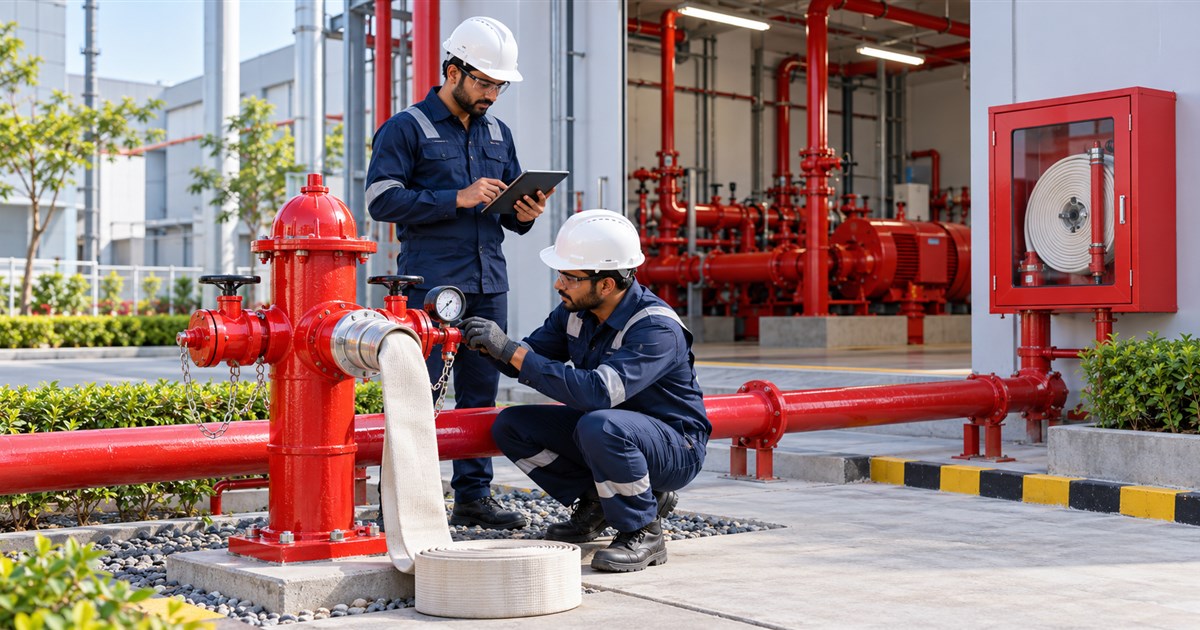
Detection and alarms can alert people and support a timely response when suitable for the environment and properly maintained.
Clear routes, warning, emergency lighting, signs and staff procedures support evacuation according to the building strategy.
Appropriate water-based, gaseous or other protection addresses defined hazards within its design limits.
Compartmentation, protected openings and suitable systems can help limit fire spread and exposure.
Responsibilities, drills, emergency access and response plans support coordinated action during an incident.
Inspection, maintenance and change reviews help identify deterioration and gaps before protection is needed.
| Measure | Role and considerations |
|---|---|
| Detection and alarms | Identify defined fire conditions and warn occupants; review coverage, environment, power and interfaces. |
| Hydrants, sprinklers and pumps | Provide suitable water-based protection with engineered demand, pressure, coverage and maintenance. |
| Specialist suppression and extinguishers | Address specific hazards using compatible agents, equipment and operating procedures. |
| Passive protection | Support compartmentation and protected routes through suitable construction, openings and penetration protection. |
| Preparedness and maintenance | Define responsibilities, drills, inspection, tests, records and corrective-action processes. |
One device or system does not address every hazard. Selection must account for occupancy, processes, materials, building layout, utilities, emergency access and applicable requirements.
Installing equipment does not automatically guarantee approval, eliminate all fire risk or secure a particular insurance premium.
Collect plans, use, hazards, occupant needs, existing equipment and approval information.
Review prevention, detection, warning, suppression, passive measures and emergency arrangements.
Agree suitable equipment, installation, testing, documentation and responsible persons.
Inspect, test, train, record defects and review changes to the building or operations.
BIS building-code information provides background on fire and life-safety provisions. Confirm the current applicable requirements, adopted references and approval conditions with the competent authority for the actual premises.
Equipment evidence, practitioner credentials, inspections and statutory certificates have different purposes. Define the required documents and responsibilities before appointing a contractor or undertaking changes.
Reliance Fire Protection Systems supports fire protection and Fire Safety Audit Services enquiries across all Indian states and union territories. Project scope is coordinated from Mumbai according to the premises, hazards, required credentials and local approval conditions.
Delhi is a union territory; Delhi NCR also includes locations in neighbouring states. Enquiry coverage does not indicate a local office in each state or union territory.
Our fire protection and Fire Safety Audit Services support covers enquiries for the following industrial zones, IT parks, SEZs, logistics hubs and manufacturing clusters across India. Survey, supply, execution and service arrangements are agreed for each site.
Fire protection systems help provide early warning, support escape, control or suppress defined fire hazards and reduce potential harm to people, buildings and operations. Their effectiveness depends on suitable design, installation, testing, maintenance and emergency preparedness.
A coordinated strategy combines prevention, detection, warning, suitable firefighting or suppression, passive measures, escape arrangements, emergency access, training and maintenance. The exact measures depend on the premises and its hazards.
Active measures include systems such as alarms, sprinklers and other suppression that operate manually or automatically. Passive measures include fire-resisting construction, compartmentation, protected openings and penetration protection. They support different parts of the same strategy.
No. Portable extinguishers address only part of the strategy. Review the occupancy, hazards, detection, warning, escape, building protection, emergency arrangements and maintenance requirements rather than treating one product as a complete solution.
Suitable detection and warning can alert occupants and responsible staff to defined fire conditions and initiate agreed responses. Coverage, environmental suitability, audibility or other notification, interfaces, power and maintenance must be considered.
No. Selection depends on occupancy, processes, stored materials, equipment, layout, water supply, environmental constraints and applicable requirements. A system suitable for one hazard must not automatically be used for another.
Equipment can deteriorate, develop faults, become obstructed or be affected by changes to the premises. Inspection, testing and records help identify defects and keep the protection aligned with its approved design and operating needs.
An agreed audit can review hazards, systems, escape arrangements, records and preparedness, then identify findings and corrective-action priorities. Sampling, access and testing limitations must be recorded; an audit is not a guarantee that fire cannot occur.
No. Design, installation, product evidence and statutory approval are separate matters. Confirm applicable building, fire and other requirements, relevant authority conditions, required credentials and prescribed documents for the actual premises.
No specific financial or operational result is guaranteed. Suitable protection may help manage risk, but insurance terms depend on the insurer and the facility, and fire can still cause disruption. Confirm insurer requirements and business-continuity arrangements separately.
Reliance Fire Protection Systems supports survey, design coordination, installation, commissioning, Fire Safety Audit Services and maintenance enquiries from Mumbai across all 28 Indian states and 8 union territories. Scope and site arrangements are confirmed for each project.
Collect the plans, occupancy and hazard information, existing-system details, maintenance records and approval conditions. Define the required review with competent specialists and assign responsibilities for corrective work, staff preparedness and ongoing maintenance.
Share your site location, plans, hazards, existing systems and required scope for a project-specific discussion.