Engine rooms and machinery spaces
Detection, fixed suppression and local application arrangements where required, coordinated with fuel isolation, ventilation shutdown, machinery controls and the approved release sequence.

Turnkey fire protection for vessels and marine infrastructure
Project-specific fire detection, alarm, suppression and firefighting solutions for engine rooms, machinery spaces, accommodation, cargo areas, vessels, shipyards and port facilities.
Marine fire protection combines prevention, detection, alarm, containment, extinguishing systems, escape arrangements and maintenance to protect people, vessels and marine facilities from fire.
Shipboard hazards include fuel and lubricating-oil leaks, hot machinery surfaces, electrical faults, galley cooking, cargo ignition, welding and other hot work. Protection is selected for the vessel, space, cargo, occupancy, operating environment and applicable flag-state or classification requirements.
Reliance Fire Protection Systems supports project enquiries, surveys, engineering coordination, supply, installation, testing, commissioning and maintenance from Mumbai for marine and related facilities across India, subject to scope, equipment approvals and site access.
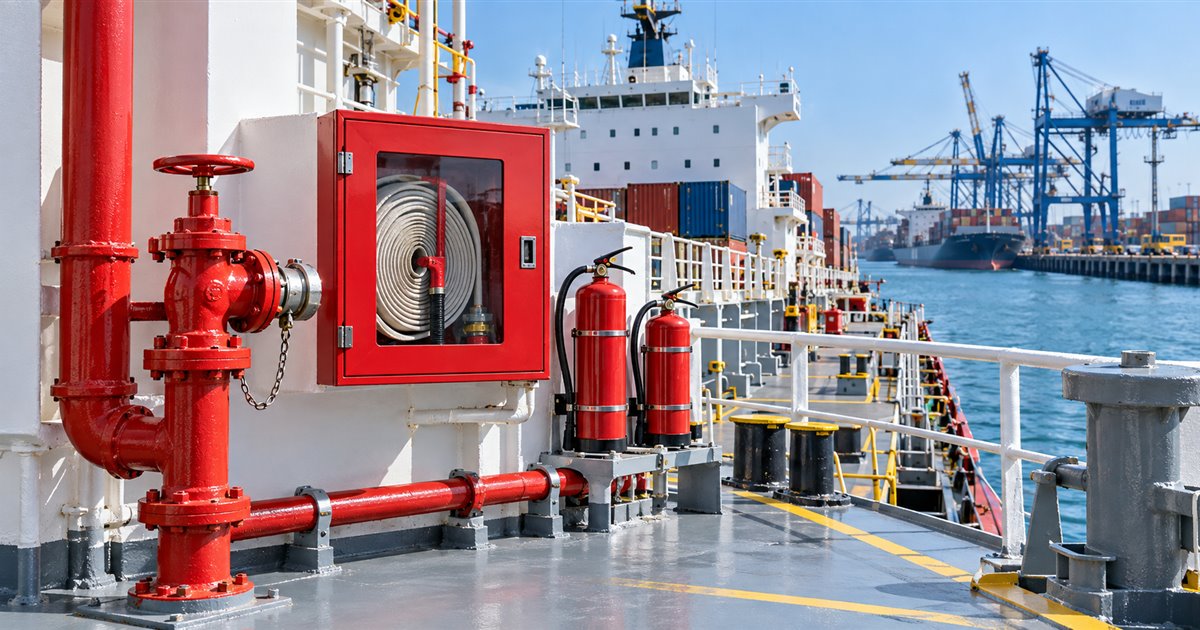
Illustrative marine fire-safety scene; equipment and arrangements are selected for each approved project design.
Detection, fixed suppression and local application arrangements where required, coordinated with fuel isolation, ventilation shutdown, machinery controls and the approved release sequence.
Suitable smoke, heat and flame detection with manual call points, alarm indication and monitored interfaces for machinery, accommodation and other protected vessel spaces.
Project review for approved CO2, water mist, water spray, sprinkler, foam or other suitable systems according to space hazards, vessel rules, agent limitations and equipment approvals.
Fire pumps, emergency supply arrangements where applicable, fire mains, hydrants, hoses, nozzles, monitors and connections selected for the vessel or marine facility.
Space-specific detection and protection for occupied areas, cooking equipment, stores, cargo spaces and vehicle decks, with fire containment and escape-route coordination.
Fire-risk review, hot-work controls, shore-side fire systems, portable equipment, inspections, testing, commissioning and maintenance support for marine operations.
| Area or hazard | Protection to assess | Engineering consideration |
|---|---|---|
| Engine rooms and fuel systems | Detection, approved fixed suppression, local application and isolation interfaces | Space volume, oil hazards, occupancy, ventilation and release controls |
| Accommodation and escape routes | Detection, alarm, sprinklers where required, containment and emergency identification | Vessel category, evacuation, smoke spread and fire divisions |
| Galleys and cooking equipment | Suitable cooking-appliance protection, detection and portable extinguishers | Cooking oil, hood/duct arrangement, fuel shutdown and approved system design |
| Cargo, ro-ro and vehicle spaces | Hazard-specific detection and fixed firefighting arrangements | Cargo type, deck configuration, ventilation, drainage and applicable vessel rules |
| Electrical and control rooms | Detection and suitable suppression with electrical and ventilation interfaces | Equipment sensitivity, enclosure integrity and occupied-space constraints |
| Shipyards, workshops and terminals | Alarm, hydrants, suitable foam/water systems, portable equipment and hot-work controls | Facility hazards, access, water supply and local authority requirements |
Enquiries are supported from Mumbai for coastal vessels, ports, shipyards, inland-waterway operations, marine workshops and related industrial facilities. Inland-state coverage relates to river craft, fabrication, servicing and associated facilities; it does not imply a seaport or local branch in every state.
Marine fire protection combines prevention, detection, alarm, containment, extinguishing systems, escape arrangements and maintenance to protect people, vessels and marine facilities from fire.
Depending on the vessel and approved design, engine-room protection may include fire detection, fixed gas or water-based systems, local application protection, fire mains, portable extinguishers and ventilation or fuel shutdown interfaces.
No. Selection depends on the space, occupancy, vessel rules and approvals. CO2 total flooding creates a dangerous atmosphere and requires engineered controls, release procedures, warning arrangements and evacuation before discharge.
Requirements depend on vessel type, size, service, flag and classification. Applicable SOLAS chapter II-2, the FSS Code, flag-state and class rules should be reviewed. Shore facilities also require local statutory and fire-authority review.
Marine systems must account for ship motion, vibration, corrosion, seawater exposure, limited escape and firefighting resources, machinery shutdown interfaces, vessel survey requirements and equipment approval.
Reliance Fire Protection Systems supports project enquiries, surveys, engineering coordination, supply, installation, testing and maintenance from Mumbai for marine and related facilities across Indian states and union territories, subject to project scope and access.
Share vessel or facility type, location, flag and class where applicable, general arrangement and fire-control plans, machinery-space details, existing equipment, system drawings, required approvals and the installation or service scope.
Share the vessel or facility type, port/location, flag and class where applicable, space drawings, existing systems, approval requirements and installation or maintenance scope.
Call +91 96999 90424 | sales@relifire.com | Contact Reliance Fire Protection Systems