PV arrays and DC circuits
Risk review for modules, connectors, string cables, junction boxes, combiner boxes, DC isolators, cable routes, earthing, surge protection and emergency identification.

Turnkey fire protection for solar energy installations
Risk-based detection, alarm, suppression and firefighting solutions for rooftop, ground-mounted, carport and floating solar installations, including inverter rooms, transformers, switchgear and control facilities.
Solar fire protection is a coordinated programme of prevention, early detection, electrical isolation, alarm, suppression, fixed firefighting systems, portable equipment, emergency access and inspection. It protects photovoltaic arrays, DC cabling, combiner boxes, inverters, transformers, switchgear, control rooms and associated infrastructure.
Potential fire hazards include loose or incompatible connectors, damaged cables, insulation failure, DC arcing, overheated terminals, inverter and combiner faults, lightning effects, transformer oil, vegetation and combustible material near electrical equipment.
Reliance Fire Protection Systems supports site surveys, design coordination, supply, installation, testing, commissioning and maintenance from Mumbai for solar project locations across India.
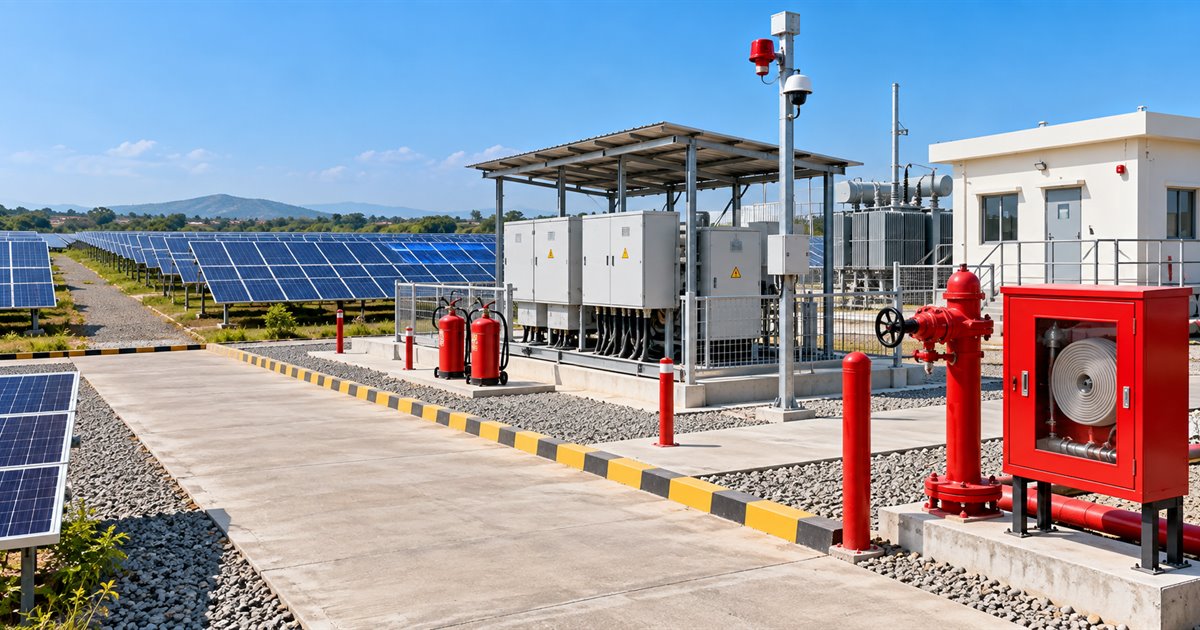
Risk review for modules, connectors, string cables, junction boxes, combiner boxes, DC isolators, cable routes, earthing, surge protection and emergency identification.
Fire detection, alarm interfaces and hazard-appropriate local or room protection for inverter blocks, power-conditioning units, panels and auxiliary equipment.
Detection, oil containment, separation and correctly engineered hydrant, monitor, water-spray or other protection according to transformer type and project requirements.
Early smoke detection, addressable alarm, suitable clean-agent or other approved suppression, ventilation shutdown and monitored interfaces for critical rooms.
Fire pumps, tanks, ring mains, hydrants, hose reels, monitors and correctly selected portable extinguishers for plant buildings and outdoor electrical facilities.
Visual inspection, alarm and suppression testing, extinguisher servicing, pump and hydrant checks, documentation, training support and preventive maintenance programmes.
| Solar fire hazard | Typical protection approach | Important design consideration |
|---|---|---|
| DC connectors, cables and combiner boxes | Correct component selection, inspection, permanent identification, isolation and fault monitoring | PV circuits may remain energised in daylight; isolation points and cable routes must be understood |
| Inverters, switchgear and control panels | Detection, alarm, electrical interlocks and approved local or enclosure protection where justified | Equipment construction, voltage, ventilation, occupancy and manufacturer requirements |
| Oil-filled transformers | Separation, drainage and containment with suitable detection, hydrant, monitor or water-spray protection | Oil quantity, transformer rating, exposure, water supply and statutory/project criteria |
| Rooftop solar installations | Clear access paths, identification, safe isolation, compatible extinguishers and building fire-system coordination | Roof construction, occupancy, escape routes, firefighter access and local fire requirements |
| Vegetation and external exposures | Housekeeping, vegetation management, separation, patrols, water points and emergency planning | Season, wind, surrounding land use, response time and remote-site access |
| Battery energy storage connected to solar | Separate battery hazard assessment, early detection, ventilation and listed suppression or propagation controls | Cell chemistry, cabinet/container design, gas release, thermal runaway and manufacturer approvals |
Project support is available for solar parks, industrial and commercial rooftops, institutional campuses, warehouses, housing projects, carports, floating solar projects and remote power installations across India.
Solar fire protection combines prevention, electrical safety, early detection, alarm, isolation, suppression, fixed firefighting systems, portable equipment, emergency access and inspection for photovoltaic installations and their supporting electrical infrastructure.
Potential causes include loose or incompatible connectors, damaged DC cables, insulation failure, arcing, overheated terminals, inverter or combiner faults, poor workmanship, inadequate protection, lightning effects and combustible material near electrical equipment.
The extinguisher must be selected for the identified hazard, voltage, equipment and approved design. Energised electrical equipment requires an electrically appropriate extinguishing medium and trained response; water must not be applied indiscriminately to live equipment.
PV modules can continue producing DC power when exposed to light. Emergency planning should therefore identify DC and AC isolation points, permanent labels, cable routes and safe access for trained responders.
Yes. Rooftop systems require special attention to access, evacuation, roof construction and occupied areas, while utility-scale sites also require protection for inverter blocks, transformers, substations, control rooms, vegetation and remote emergency response.
Reliance Fire Protection Systems supports surveys, engineering coordination, installation, testing and maintenance for solar project locations across Indian states and union territories.
Useful inputs include project location and capacity, rooftop or ground-mounted configuration, single-line diagram, array and equipment layout, inverter and transformer details, battery storage scope, existing fire systems, water availability and applicable approval requirements.
Share the project location and capacity, system layout, single-line diagram, inverter and transformer details, battery scope, existing fire systems and applicable approval requirements for a project-specific review.
Call +91 96999 90424 | sales@relifire.com | Contact Reliance Fire Protection Systems