Vehicle and fleet surveys
Review the vehicle type, fuel, engine or powertrain arrangement, compartment geometry, existing equipment, access and required approval scope.

Vehicle-specific fire detection, suppression and water-mist support
Fire-risk surveys, suitable system selection, installation, commissioning and maintenance enquiries for fleet operators, bus builders, schools, institutions and transport projects across India.
Bus fire protection combines fire-risk assessment, suitable detection and alarms, engine-compartment suppression where specified, passenger-compartment protection where required, evacuation arrangements and maintenance. The system must suit the actual vehicle and its approval requirements.
Engine-bay hazards may include fuel and lubricant leaks, hot surfaces, wiring faults and combustible deposits. Passenger-area and electric-bus hazards require their own assessment rather than reuse of an engine-only solution.
Reliance Fire Protection Systems supports project enquiries from Mumbai for vehicle surveys, engineering coordination, supply, installation, testing, commissioning and maintenance across India.
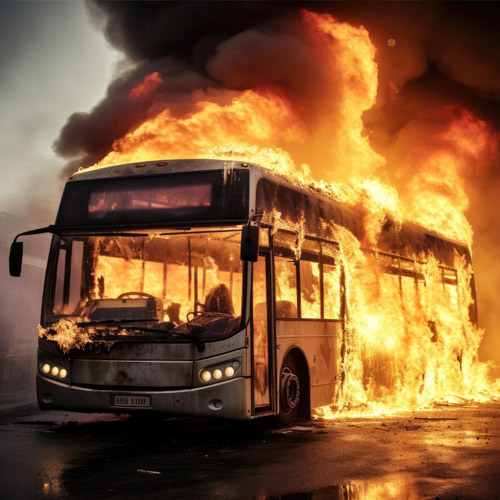
Illustrative fire-risk image; it does not show an installed system or evidence of suppression performance.
Review the vehicle type, fuel, engine or powertrain arrangement, compartment geometry, existing equipment, access and required approval scope.
Coordinate the suitable tested detection and suppression arrangement with the actual engine hazards, airflow, vibration and system application limits.
Review passenger-area protection requirements separately from engine suppression, including coverage, controls, storage, access and vehicle conditions.
Define the required indications, controls, wiring protection, power supply and OEM-approved interfaces for the selected system.
Install the compatible components without obstructing exits or servicing, then complete the specified inspection, control and functional checks.
Plan inspections and servicing of detection, agent or water storage, pressure, nozzles, hoses, controls and records under the equipment instructions.
| Area or vehicle type | Hazards and objectives | Design checks |
|---|---|---|
| Diesel engine compartment | Fuel or lubricant leaks, hot surfaces and electrical faults | System test scope, airflow, geometry, nozzle coverage and vehicle integration |
| Passenger compartment | Occupant warning, heat/smoke exposure and evacuation support | Separate detection, water-mist design, activation and coverage requirements |
| CNG or other fuel arrangements | Fuel-specific hazards and electrical or machinery interfaces | OEM requirements and agent/system suitability for the actual fuel |
| Electric or hybrid bus | Electrical, BMS and traction-battery hazards | Relevant EV provisions; no assumption that an engine system controls battery thermal runaway |
Collect model, fuel, category, layout, fleet quantity, existing equipment and approval requirements.
Assess engine and passenger areas separately and review the selected system's documented application limits.
Confirm mounting, coverage, controls, wiring, servicing access and any OEM or approval requirements.
Complete specified testing and handover records, with operator instructions and fleet maintenance planning.
AIS-135 and its amendments, published by ARAI, address bus fire detection, engine-compartment suppression and occupant-compartment protection. The 2025 amendment includes electric-bus alarm provisions with applicability tied to notification under CMVR.
The 2023 amendment includes occupant-compartment alarm and water-mist installation provisions. Check the current notified requirements for the bus category, system and vehicle approval rather than assuming one installation covers every bus type.
Where specified, review UN Regulation No. 107 alongside OEM instructions and the accepted approval basis. A reference to a standard does not establish certification of equipment offered on this page.
Enquiries are coordinated from Mumbai for city fleets, intercity coaches, school and institutional buses, private operators and vehicle builders. Site services depend on vehicle access, equipment selection, project scope and location.
Bus fire protection combines fire-risk assessment, suitable detection and alarms, engine-compartment suppression where specified, passenger-compartment protection where required, evacuation arrangements and maintenance. The system must suit the actual vehicle and its approval requirements.
A suitable system detects fire conditions in the protected engine area and raises an alarm, with automatic discharge where the approved design provides it. Agent delivery, nozzle or discharge-point locations, manual controls and any vehicle interfaces follow the system design and installation instructions.
Not necessarily. Engine-compartment suppression and occupant-compartment water-mist protection have different hazards, discharge arrangements and objectives. The correct system must be selected and verified for its intended compartment rather than assumed to protect the whole bus.
An appropriately designed occupant-compartment system distributes water mist to address the specified fire or heat exposure and support evacuation. The activation method, coverage and performance depend on the approved design; it is not a guarantee of safe conditions or a substitute for evacuation.
Review applicable CMVR requirements, AIS-135 and its relevant amendments, the vehicle category and the OEM or type-approval conditions. UN Regulation No. 107 may also be relevant where specified. The current legal applicability must be confirmed for the actual vehicle and installation.
No. Electric buses require assessment of their powertrain, electrical and battery-related hazards and the relevant approval provisions. An engine-compartment suppression system should not be assumed to control traction-battery thermal runaway.
A retrofit may be considered after reviewing the bus layout, hazards, suitable tested system, mounting space, vehicle wiring, discharge coverage and OEM or approval requirements. Installation must not compromise exits, vehicle systems or service access.
Selection depends on fuels, oils, hot surfaces, electrical components, airflow, compartment geometry and the tested system's application limits. Agent suitability and discharge coverage should be established from the manufacturer documentation and approval scope.
Reliance Fire Protection Systems supports fleet and vehicle fire-protection enquiries from Mumbai for locations across Indian states and union territories. Survey, supply, installation, testing and maintenance scope depend on vehicle access, selected equipment and project requirements.
Share the fleet location, vehicle make and model, fuel or powertrain type, bus category, compartment drawings or photographs, existing protection, proposed scope, fleet quantity and required approval documents.
Follow the vehicle and system manufacturer instructions, approval conditions and fleet maintenance plan. Checks may include agent or water condition, cylinders, pressure, detection, hoses, wiring, nozzles, controls, corrosion, damage and service records.
Share the fleet location, vehicle make and model, fuel or powertrain type, bus category, compartment drawings or photographs, existing protection, proposed scope, fleet quantity and required approval documents.
Call +91 96999 90424 | sales@relifire.com | Contact Reliance Fire Protection Systems